Navigate:

Advice
Beginners
BIOS Guide
CPUs
Links
Mainboards
Memory
Network
Storage
Video/Sound Cards

Contact
Forum
SiteMap
Sponsors
WebNews
Home
. .

Prices:

Mainboards

ABIT
ASUS
Chaintech
Shuttle
Soyo
Tyan

CPU
Intel
P4 2.4C-800
P4 2.6C-800
P4 2.8C-800
P4 3.0-800
P4 3.2-800

AMD
AthlonXP
XP 1700+
XP 2000+
XP 2400+
XP 2500+
XP 2700+
XP 3000+
XP 3200+

Athlon64
Athlon64 3200+
Athlon64 FX-51

Opteron
Opteron 240
Opteron 242
Opteron 244
Opteron 246

Memory

Corsair
Crucial
Kingston
Mushkin
OCZ

Search Prices:


LOSTCIRCUITS

SHORTCUTS:
A Higher Bus Frequency
Test Configurations
Memory Subsystem
Power Consumption
3D Rendering Energy Efficiency
Cinebench
AV Encoding: DVD-Shrink, DrDivX, MainConcept
AV Encoding: Virtualdub / DivX and SSE4
Gaming: 3DMark '06
FarCry
F.E.A.R.
The Down and Dirty
Dis-Illusions

Give Us Some Feedback on this Review

 Intel's Yorkfield QX9770 at 3.2 GHz
I have the Power!!
(Review by Michael Schuette, November 25, 2007)

Summary

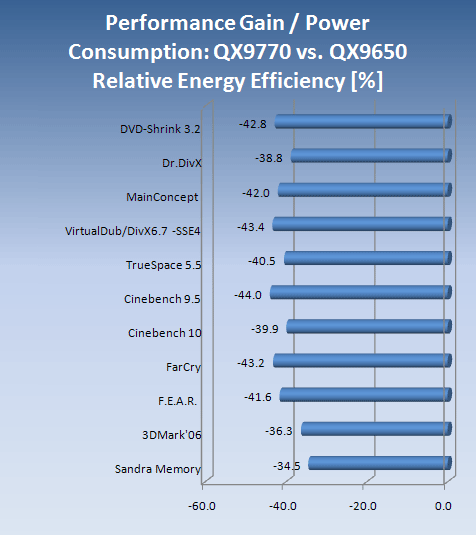
In some sort of guerilla move Intel accented AMD's launch of the Phenom/Spider Platform with sending out their new - to be available next year - flagship CPU dubbed QX9770 with official support for 400 MHz host bus speed and DDR3 1600 in synchronous mode. What sounded like a winning combination at first glance turned out to raise a bunch of hairs - er, questions - about thermals, power consumption and energy efficiency. Not that the new offering is shattering the thermal envelope of desktop processing but the exemplary milestone in the form of the Quad Extreme 9650 turns out to be an impossible act to follow.

Intel’s Yorkfield Processor, New Bus Speeds

Yorkfield QX9770 Current Intel platforms only support up to a 1333 MHz processor bus frequency. Despite of being substantially faster than any previous versions, this bus interface is still a major bottleneck when it comes down to delivering data to four cores to keep them busy. The logical way out is naturally to increase the frequency but at 64 bit width, we are looking at a really wide parallel bus that is somewhat resilient to further overclocking. At the same time, while Intel’s chipsets are supporting memory operation in a pseudo-asynchronous mode, the derived frequencies are lower than the host bus interface meaning that there is not even a theoretical possibility of taking advantage of higher memory bus speed. For all practical purposes, most likely, it wouldn’t matter anyway because the host bus bottleneck effectively would mitigate any advantages of running the memory faster.

The deus ex machine in this case is a higher speed bin of the core logic / NorthBridge that, in contrast to the rather poor overclocking headroom of the X38 SKU can be officially specked to 1600 MHz CPU and memory interface. Needless to say that a new chipset also requires the matching CPU to go with it. To make the point, a new flagship chipset needs a new flagship CPU, which, by definition, excludes any dual core offerings and rather needs to have the omnipotent “QX”, short for Quad Extreme.

The bus threshold for exceeding certain frequency limitations is no stranger to any reviewer who has been around long enough to witness the ill-begotten first generation of AMD K6-2 processor and at that time we were only talking about 100 MHz. Now the name of the game is 1600 MHz and despite the fact that most Core2 Quad CPUs can handle it, the Intel “official seal of approval” does require additional headroom for an official qualification of this speed. Binning the dies for 400 MHz bus interface is one way of getting there. But maybe, despite any official confirmation, there are other modifications under the hood that were done to ensure yields?

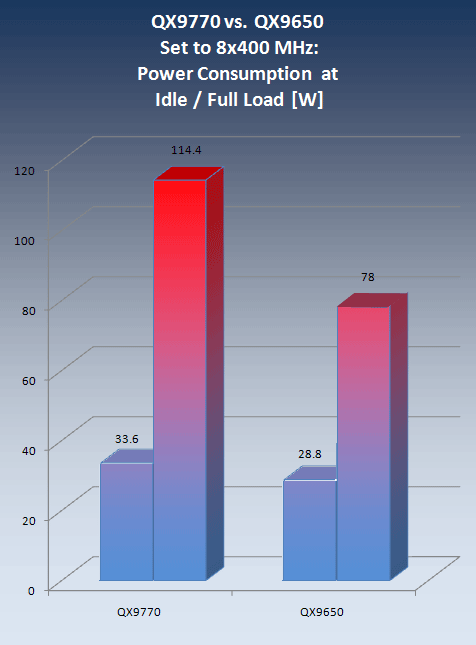
We were looking at the Quad Extreme 6770 that was dis-embargoed, just in time to disturb AMD’s Phenom launch. What made perfectly sense at first glance or with respect to performance, all of a sudden raised a bunch of questions when it came to heat dissipation and power consumption. We don’t have definite answers but we have data points that are suggesting that the QX9770 is not just a QX9650 with more headroom but that there may have been a few other adjustments that were made. .

The specifications of the Penryn-core based Yorkfield and Wolfdale processors have been covered in our Yorkfield launch article, so we can just jump ahead to the meaty part.


(BX80557E6300)

next page: => Test Configurations =>

All advice and educational articles on LostCircuits are free, but if you feel you can, please make a small donation to us!
Thank you!

General disclaimer: This page only reflects the author's personal opinion and assumes no responsibility whatsoever regarding any of the contents or any damages that may occur explicitly or implicitly from reading the contents of this site. All names and trademarks mentioned in this review are the exclusive property of the respective parent companies.
All contents of this site are protected by international copyright laws. Reproduction of the contents even in parts is not allowed except after written permission by the author and referral to this site.
Copyright 2002 - 2008 LostCircuits